Second Brain
Keep the source close to the study session
Ownership
Designer & Developer
Key fact
Delivery: Private personal tool
Overview
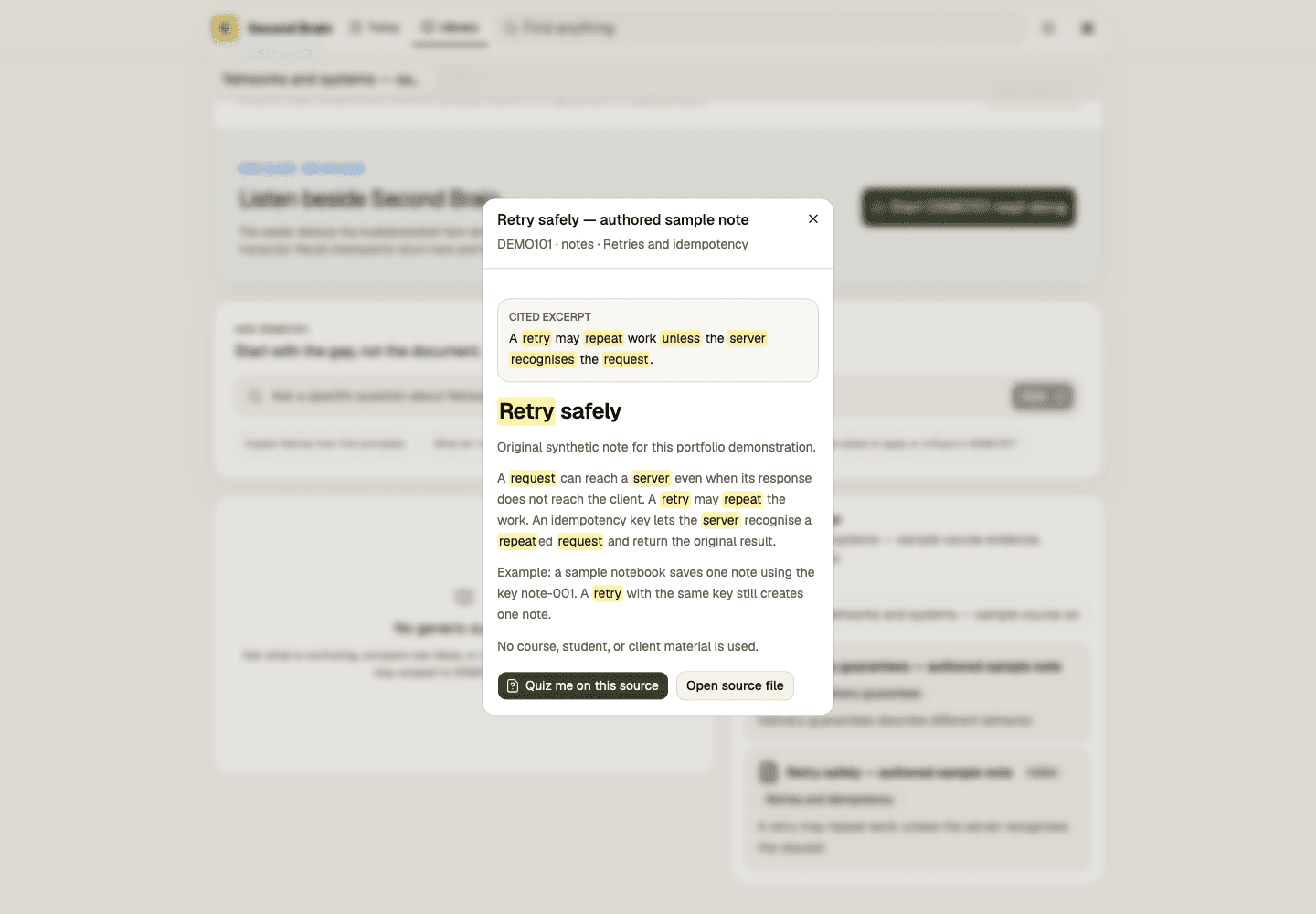
I built Second Brain for my own studying. It's a private workspace where the source documents, a plan for today and a few minutes of practice sit side by side, and everything I've learned can be exported and restored. The screenshots use authored sample notes and a fictional course, not real course material or student records.
The Challenge
A note app is good at holding things and bad at helping me use them. What I wanted was a short path from "what needs my attention today" to the source that explains it, then straight into practice, without losing my place between those steps.
Approach
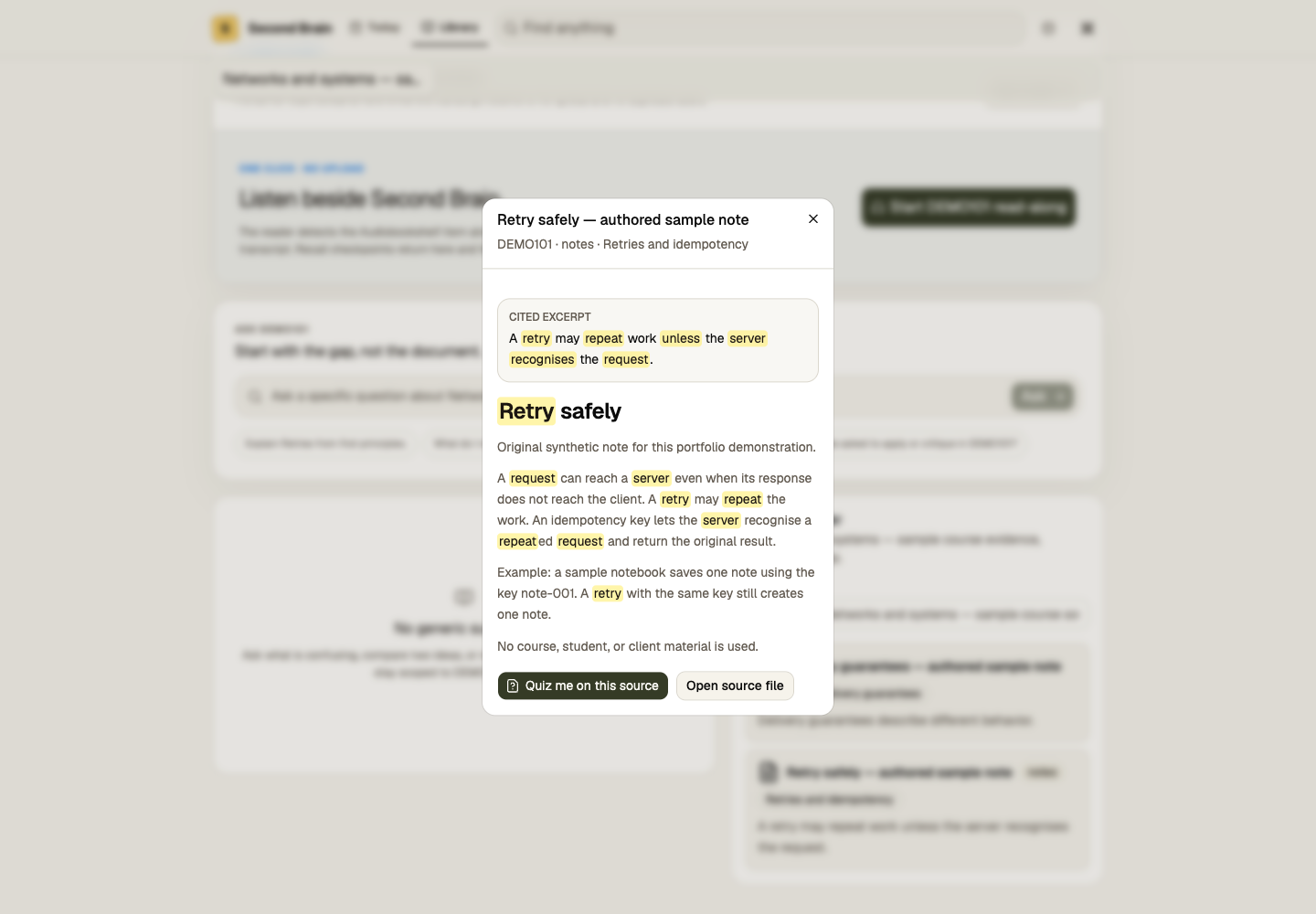
1. Read with the source in view
The library opens source text inside the workspace. Reading and practice keep their source identity, so an explanation can be checked against the material behind it.
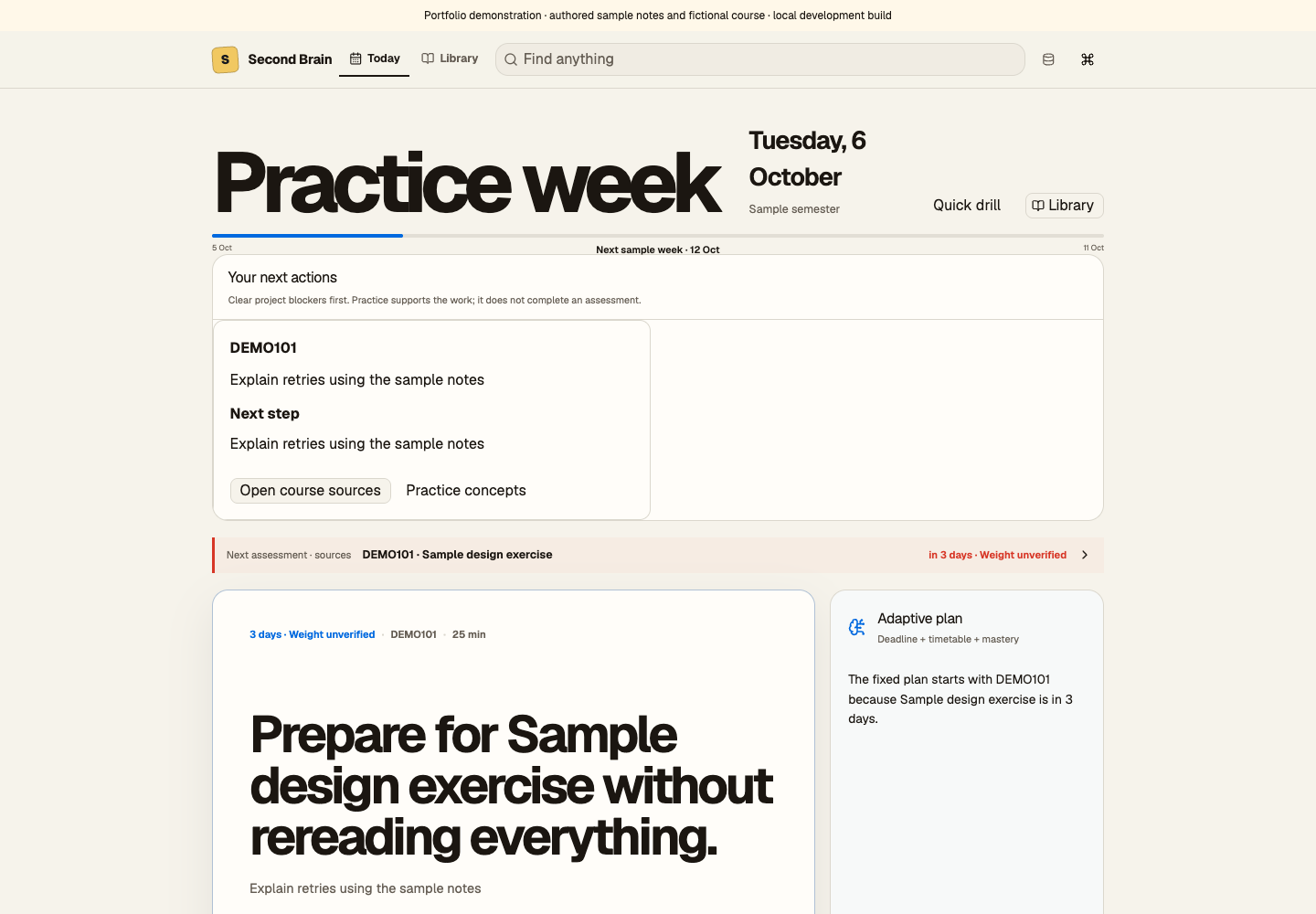
2. Plan around the next deadline
The local build brings upcoming work and review needs into a daily view. Practice scheduling considers prior attempts and future assessment dates; it does not treat practice as a completed assessment.
3. Keep learning history portable
Practice attempts use a validated learning ledger. Imports merge records rather than blindly replacing the current history, and export provides a backup outside browser storage.
Outcome
A personal study workspace I can keep refining around my own use. The source reader and learning ledger have direct implementation and test evidence. The newer adaptive work is local development, and the answer-generation audit is unfinished; this case study does not claim a released tutoring service or verified learning outcomes.
At a glance
Private personal tool
Delivery
Authored synthetic fixtures
Screenshot data
Learnings
- →Reading and practice work better when the original source remains easy to open.
- →A completed practice attempt and a completed assessment need separate records.
- →A browser-stored history needs validation and a portable backup.
Next project
Whakapapa